
CASE STUDY
SPORT 24 mapped 1,000 activities in two months to fix a failed retail ERP migration
Denmark’s largest sports retailer had already attempted to migrate to a new ERP system. It failed. The post-mortem pointed to a single cause: no one could accurately describe how the business actually worked.
With 1,500 employees and DKK 1.5 billion in annual turnover, SPORT 24 could not leave that situation unresolved. When Microsoft ended support for their existing system, the next attempt at a retail ERP migration to Microsoft Dynamics Business Central had to succeed. This time, they fixed the process problem first.
Over two months, 25 SPORT 24 employees used Gluu to document 1,000 activities across 100 key processes. That work broke down departmental silos, exposed inefficiencies, and created the foundation the ERP implementation needed.
The migration succeeded. Since then, SPORT 24 has used its process documentation to manage twice-yearly cloud updates, build toward international expansion into three new markets, and handle process work entirely in-house — without external consultants.
“We’re no longer guessing at how our business works. Now, we’re using our processes and technology as a launch pad for growth. With Gluu, we gained the clarity we needed to give our business ‘superpowers’.”
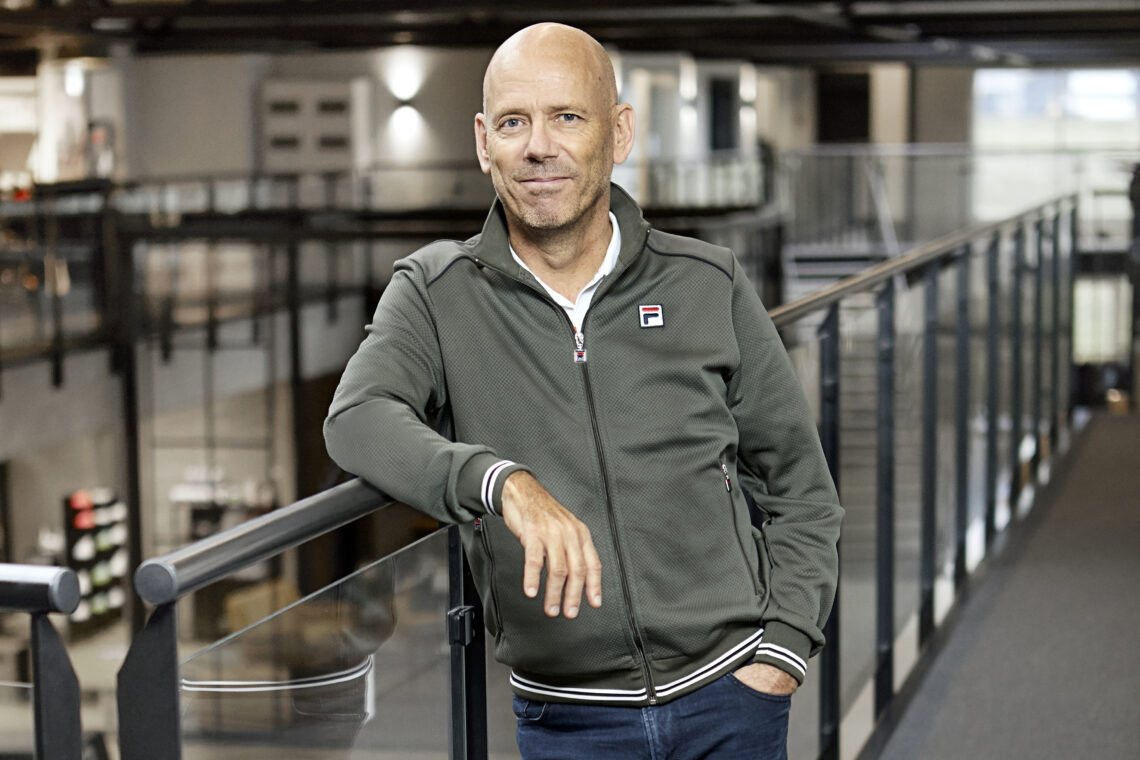
Lars Elsborg
CEO, SPORT 24
Activities mapped
1,000
Activities documented across 100 key processes
Completed by 25 employees before ERP go-live
Processes mapped
100
Key processes built as the ERP foundation
End-to-end, cross-departmental process visibility
Time to map
2
months
From zero documentation to a complete process foundation
Across 25 employees from multiple departments
New markets
3
International expansion targets planned for 2025
Enabled by SPORT 24’s process framework in Gluu
The decision that changed the outcome
SPORT 24 had relied on a legacy ERP system for years. Over time, it accumulated a tangle of custom add-ons and workarounds. When Microsoft announced the end of support for that system, migration was no longer optional — and the company attempted to move to Microsoft Dynamics Business Central. The project stalled.
CEO Lars Elsborg is direct about what happened: “We were constrained by technology rather than supported by it. The previous system made it incredibly difficult to execute new initiatives. And when we first tried to transition to Business Central, we realized we simply didn’t have the clarity we needed to succeed.”
The problem was not the ERP software itself. The core issue was visibility. SPORT 24’s workflows were undocumented, siloed across departments, and inconsistent between teams. Without clear processes, there was nothing reliable to configure the new system against. For any retail ERP migration to succeed, that process clarity has to come first — and SPORT 24 had skipped that step the first time.
How SPORT 24 used Gluu to build that foundation
Before attempting a second retail ERP migration, SPORT 24 turned to Gluu. Their reason for choosing it was specific: unlike many process documentation tools that require technical expertise to operate, Gluu is designed for business users — meaning the people who actually do the work can map and own the processes themselves.
The mapping effort was systematic and time-bound. Over two months, 25 employees documented 1,000 activities across 100 key processes. As they worked, they identified gaps, redundancies, and opportunities to simplify before the ERP implementation began. Cross-departmental workflows that had previously lived in separate silos were connected into end-to-end views.
Frank K Jensen, Head of IT and Digitalisation at SPORT 24, describes what that shift meant: “We used to have processes that were fragmented and documented in silos. Now, we see them as complete, end-to-end workflows. This has been a game-changer for us.”
Having a platform where processes are documented, owned, and accessible to everyone makes every phase of an ERP implementation more reliable — from initial scoping through go-live and beyond. If you want to see how that works in practice, Gluu’s free trial is a good place to start.
Gluu free 30-day trial. No credit card required. Start from €24 / year.
What the second migration delivered — and what came after
The second retail ERP migration succeeded. With documented, optimized processes already mapped to the system’s structure, SPORT 24 aligned Business Central to how the business actually operated. The implementation that had stalled the first time completed cleanly.
Beyond the go-live, the process clarity built in Gluu continued to deliver across four distinct areas.
Process optimization as ongoing practice
Now that SPORT 24’s processes and standard operating procedures are documented in Gluu, the team uses the platform to continuously identify automation opportunities and efficiency gains. Frank Jensen explains: “Gluu helps us spot where processes can be optimized or automated. Instead of just reacting to issues, we proactively improve how we work.”
Managing cloud updates with confidence
Business Central releases major updates twice a year. For most organizations, those updates introduce uncertainty — which configurations will shift, which processes will break. For SPORT 24, the answer is already in Gluu. “With Gluu, we can now easily identify which processes will be affected by these updates and make adjustments proactively,” Frank Jensen explains. The process documentation that enabled the migration now enables ongoing ERP maintenance.
A framework built for international expansion
With its ERP system and business processes aligned, SPORT 24 is positioned to enter three new international markets in 2025. Replicating operations in a new market is now a structured exercise rather than a guessing game. As Frank Jensen notes: “We now have a structure in place that makes it easy to replicate and scale our operations. That’s a massive competitive advantage.”
Internal capability instead of external dependency
One of the more significant outcomes has been a shift in how SPORT 24 thinks about process work itself. “Before Gluu, we thought we needed to hire external process experts. But the tool is so intuitive that we were able to manage everything internally,” the Head of IT and Digitalisation continues. “Now, process work is second nature to us.” The webinar how a large retailer uses processes in its ERP implementation covers this approach in more detail.
In brief
SPORT 24 had attempted to migrate from its legacy ERP to Microsoft Dynamics Business Central — and failed. The root cause was not the software: their business processes were undocumented, fragmented, and inconsistent across departments, which meant the new system had no reliable foundation to configure against.
SPORT 24 chose Gluu because, unlike more technical BPM platforms, it makes process documentation accessible to business users without specialist support. That meant the 25 employees who led the mapping effort could work directly in the platform, documenting 1,000 activities across 100 processes in two months.
SPORT 24 uses Gluu as its central platform for documenting, owning, and improving business processes. The team uses it to identify automation and efficiency opportunities on an ongoing basis and to assess the impact of twice-yearly Microsoft Dynamics Business Central cloud updates before they go live.
The second retail ERP migration succeeded where the first had failed. Beyond the go-live, SPORT 24 now has a process framework that supports continuous optimization, manages twice-yearly cloud updates, and is ready to support international expansion into three new markets. Internal staff handle process work without needing external consultants.
SPORT 24’s experience suggests yes, particularly for retail organizations where process fragmentation across departments or locations is a core challenge. The ability for non-technical staff to document and own processes directly in Gluu — without IT involvement — was specifically cited as a key factor in completing the mapping project within two months.