
Features /
Process architecture
Manage every process — through every level, from value chain to work instruction
Whether you’re managing a handful of processes or thousands, Gluu keeps every level connected with clear ownership at each one, so nothing drifts back into someone’s head or a slide deck nobody opens.
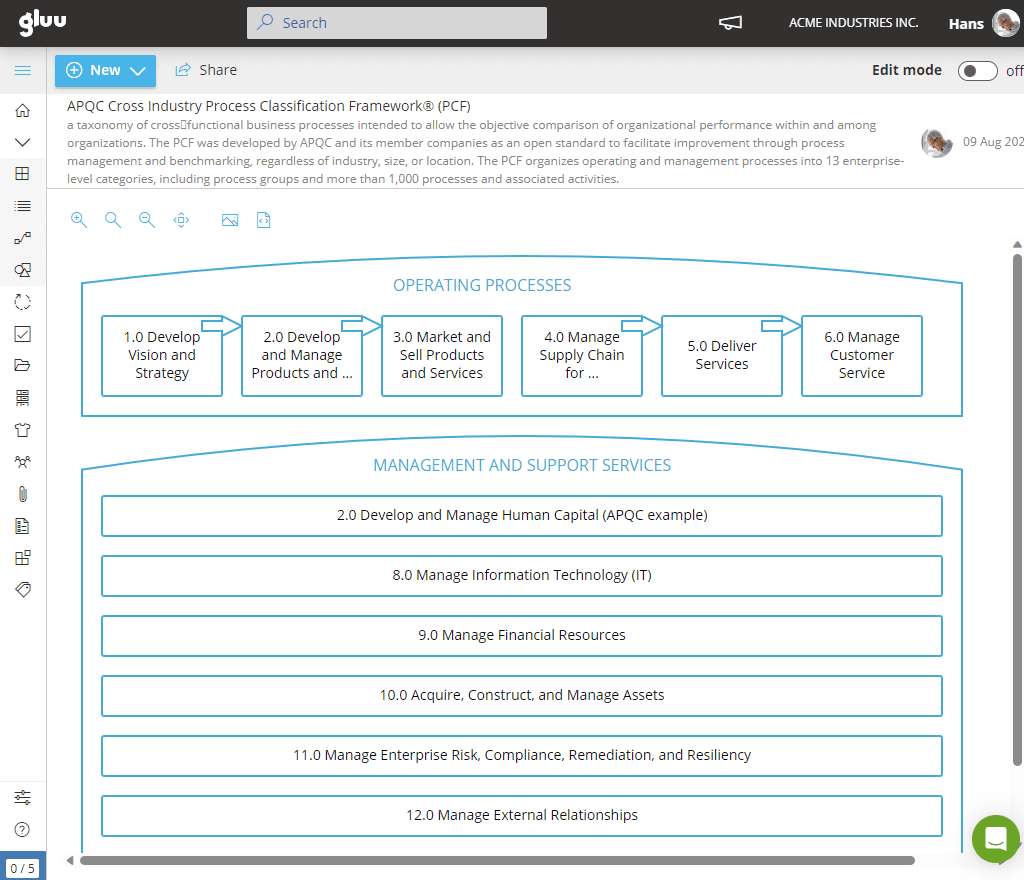
 APQC PCF
BPMN 2.0
What it is
A process hierarchy — sometimes called a process architecture — is the structure that organizes an organization’s processes by level, from the big-picture value chain down to the single work instruction that tells someone how to do one specific step. It replaces the org chart as the map of how work actually happens: instead of departments and reporting lines, it shows how activities connect, who’s responsible for each one, and how they roll up into the outcomes the business depends on.
In Gluu, that range is built in layers. Business outcome mapping and business architecture modeling give leadership the top-level view — how processes connect to value streams, customer journeys, roles and systems. Underneath that, every process sits inside a hierarchy of categories, groups and processes, each with its own owner, so a director can hold the end-to-end picture while a team lead manages the detail underneath. And underneath each process, individual activities carry the work instructions that spell out exactly how one step gets done.
Why it matters
Structure that matches how work actually flows, not how the org chart is drawn

One place to look, not ten
Processes stop living in scattered slide decks, personal folders and the memory of whoever’s been there longest. Whether you’re tracking a dozen processes or a thousand, they all sit in the same governed structure, organized by level — so there’s one place to check, not a different file for every team.

Ownership without bottlenecks
Ownership can be set at any level — broad, end-to-end areas held by senior leadership, individual processes owned by the specialist closest to the work — so a small fix doesn’t have to be escalated several levels up to get approved. Edit rights follow the same logic, globally or per process.

A structure that survives reorganizations
Copy your org chart straight into your process structure and you just reproduce the same silos in a new format — still blind wherever work crosses a team boundary. Building around the value chain instead keeps the structure intact even as the org chart changes.

Start from a standard, not a blank page
Import APQC’s Process Classification Framework, ITIL, or the Microsoft Dynamics 365 process catalog, then adapt it — rather than mapping a governance structure from zero.
Outcomes
700+
processes standardized
and connected across the organization
100+
Process Owners managing
workflows across Norlys’s full value chain, from director level down to team leads and specialists
“Gluu is easy to use. It’s really user-friendly — when we train people, it’s not the system that’s difficult. It is more to ensure quality in what is drawn in Gluu, so that it is consistent with the way we do it in the group.”
Julie Nørup Jensen, Process Consultant & Gluu Account Owner, Norlys
Explore process architecture
Ten ways to structure and govern how your organization works
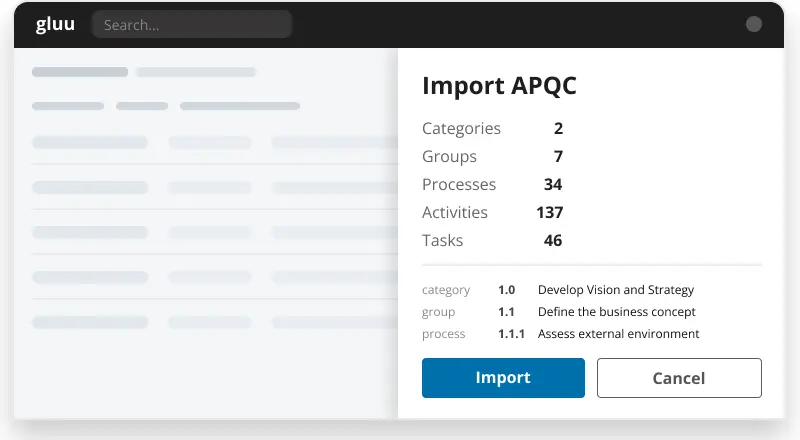
APQC Import
Import industry-standard APQC process frameworks to align your structure with best practices.
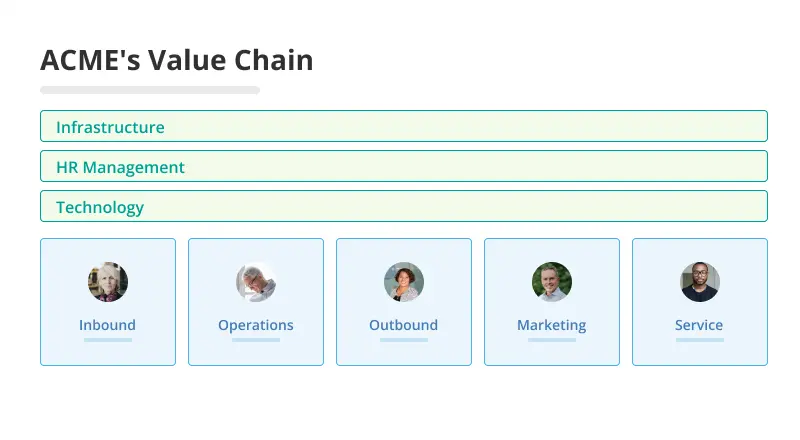
Business Architecture Modeling
Create contextual models to align business architecture with processes, roles, systems, and outcomes.
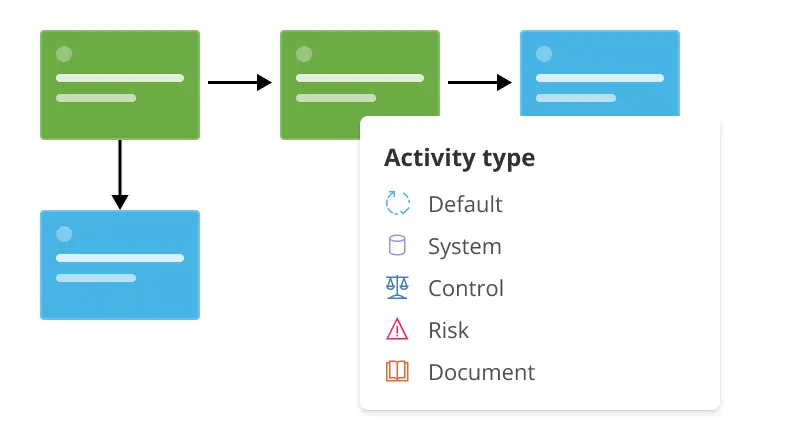
Business Outcome Mapping
Map processes to your value streams and customer journeys to show how work supports business outcomes.
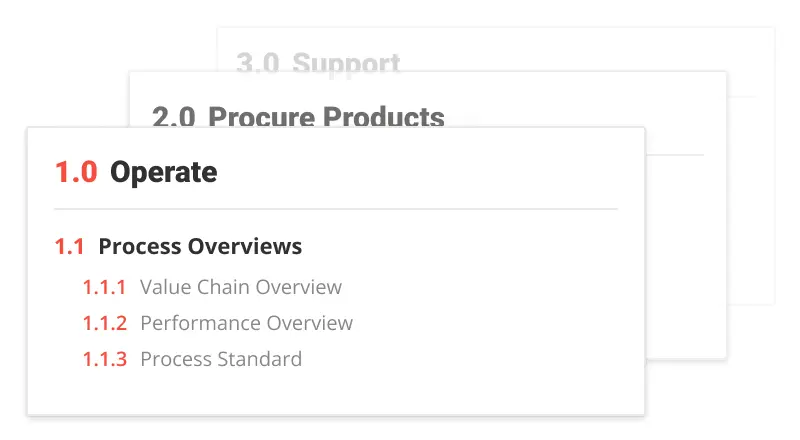
Automatic process numbering
Use automatic five-level numbering of processes according to your custom-defined structure.
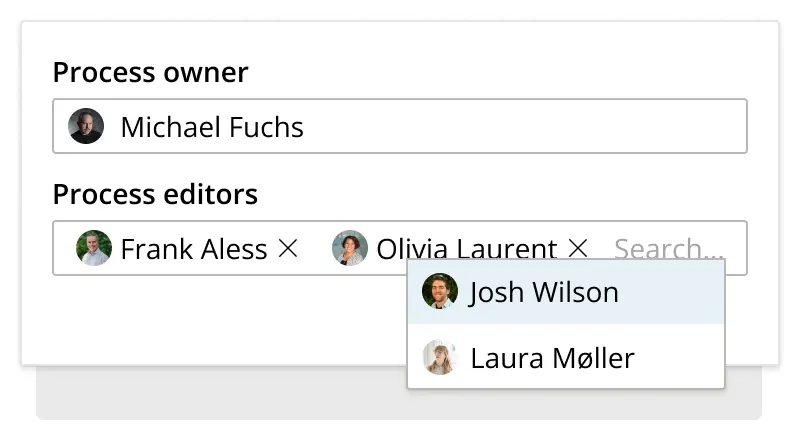
Process-specific edit rights
Manage user edit rights globally or per process to control who can view, change or approve content.
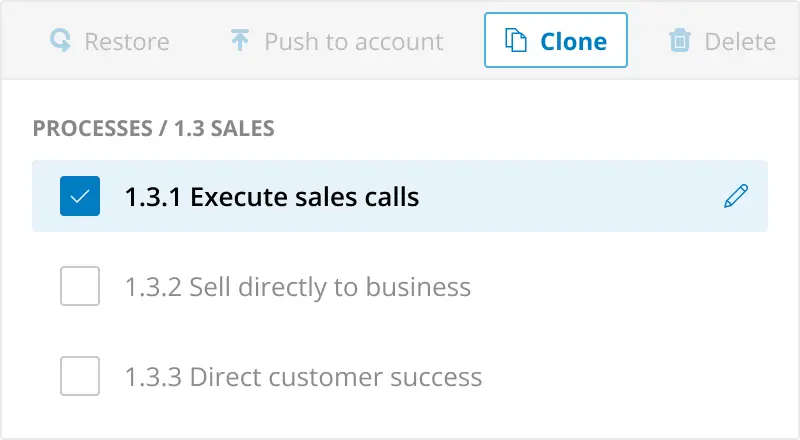
Process cloning
Duplicate and share entire processes or instructions across Gluu accounts for faster rollout.
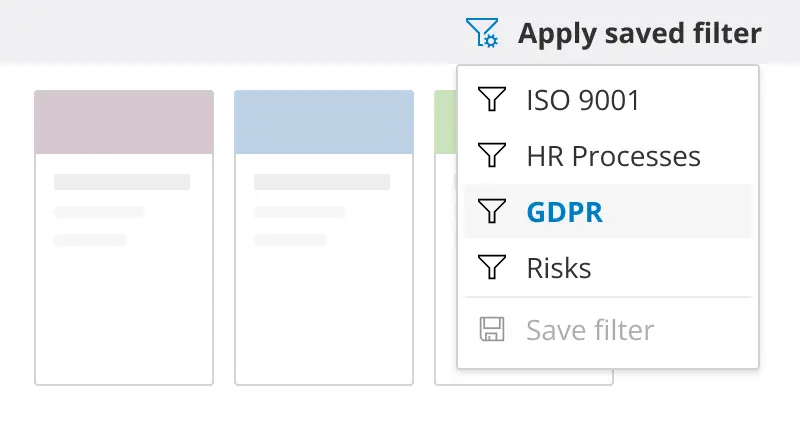
Advanced, shared filtering
Save and share filtered views of your process hierarchy — by owner, category or status — so the right part of the structure is always easy to find.
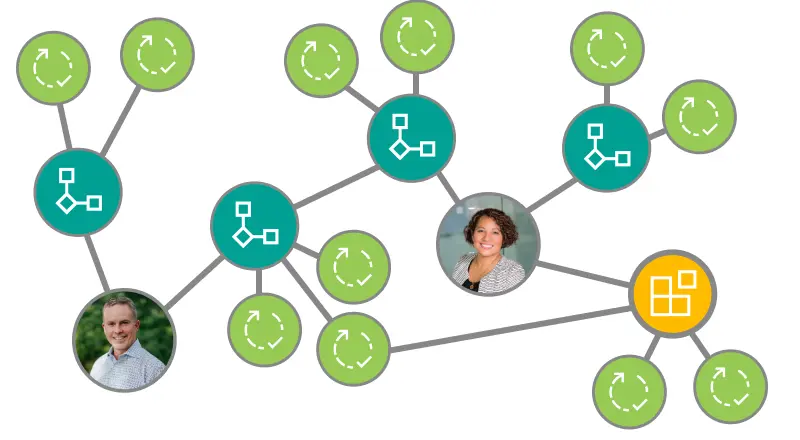
Visual process connection map
Visualize how processes and activities interconnect using filterable, clickable process maps.
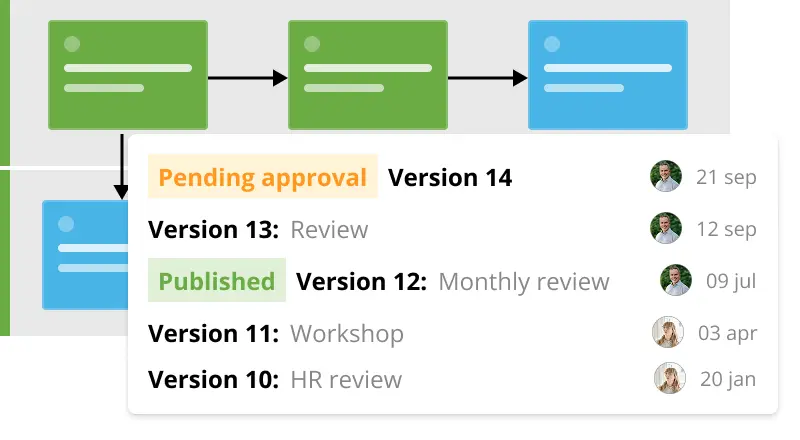
Versioning and approvals flow
Decide who can approve and publish changes to the structure itself — every edit to the hierarchy is versioned and auditable, independent of day-to-day content changes inside a process.
Frequently asked questions
An org chart shows how departments and roles relate to each other. A process hierarchy shows how the actual work — the activities — connects and rolls up into outcomes, independent of who reports to whom. The two often don’t match, and that mismatch is usually where process work gets stuck.
No. Gluu ships with APQC’s Process Classification Framework pre-loaded, so you can import a ready-made hierarchy of categories, groups, processes and activities, then adapt it. ITIL and the Microsoft Dynamics 365 process catalog are also available. If you’d rather work through it step by step, the Gluu Academy course on designing process architectures walks through building a hierarchy, value chain and governance model from the ground up.
Ownership works best split across levels: broad, end-to-end areas owned by senior leadership, with individual processes owned by the team leader or specialist closest to that work. That keeps oversight high-level while ownership of the detail stays close to the people doing it.
Process Architecture is the structural backbone — the hierarchy, ownership model and governance that everything else sits inside. Process Management is the day-to-day loop of mapping, running and improving the processes that live inside that structure. You need the architecture in place for the management loop to scale past a handful of processes. For the full framework — including maturity frameworks like APQC and SCOR, and how the L1–L4 levels work — see our guide to business process architecture.
Yes. The hierarchy organizes processes at a structural level; individual processes underneath can still be modeled with full BPMN 2.0 notation.
Because ownership and structure are two separate things in Gluu, a reorganization doesn’t require rebuilding the hierarchy — you reassign owners. Organizations managing multiple brands or post-acquisition integration tend to get the most value from building the hierarchy around the value chain rather than the org chart, for exactly this reason.
Written and reviewed by
Last updated
All Features
Keep exploring the platform
Ready to manage every process — through every level?
Gluu free 30-day trial. No credit card required. Start from €24 / year.