
Business Process Transformation

Business process transformation is how organizations change the way work gets done so results improve, not just documentation. Most importantly, it aligns people, processes, and technology so the organization as a whole can deliver consistent outcomes and improve.
Many companies try to “transform” by buying new tools or automating a few tasks. That can help, but it often misses the real reasons work feels slow or messy: unclear ownership, inconsistent execution, too many handoffs, and limited visibility into what is happening day to day. Therefore, a real transformation focuses on the end-to-end flow across teams, systems, and decisions.
This guide explains what business process transformation is, why it matters, which models are commonly used, and how to implement change in a way that sticks. Besides that, you’ll find practical examples and a set of FAQs that match what others look for.
What Is Business Process Transformation?
Business process transformation is a coordinated redesign of processes, workflows, roles, and supporting technology to achieve better outcomes. In other words, it changes how work is coordinated, executed, and improved.
Organizations usually pursue transformation to reduce costs, improve customer satisfaction, strengthen compliance, or stay competitive. However, the best initiatives start with a clear outcome. For example: “reduce onboarding time by 30%,” “cut rework in procurement by half,” or “improve service resolution within 24 hours.” When outcomes are clear, scope decisions become simpler.
Process transformation vs. simple automation
Automation speeds up tasks. Transformation improves the whole flow. For instance, automating an approval step might save minutes, but it will not fix missing information, unclear decision rights, or handoffs between departments. Therefore, automation should be treated as an enabler of a better process design, not as the design itself.
- Automation: makes a step faster (routing, reminders, validations).
- Optimization: improves an existing process (remove waste, simplify steps).
- Transformation: redesigns the end-to-end workflow, including ownership, governance, and adoption.
Transformation can be radical or incremental. A radical redesign might rebuild a customer journey around self-service and real-time data. An incremental approach might standardize how exceptions are handled and reduce unnecessary approvals. In both cases, the goal is to make execution reliable and measurable, while keeping the organization flexible.
Michael Hammer, father of Business Process Reengineering
“Don’t automate. Obliterate.”
Why Business Process Transformation Matters
Processes connect strategy to execution. When processes are unclear or fragmented, teams compensate with meetings, workarounds, and escalation chains. As a result, costs rise and customers experience inconsistency. Besides that, employees spend time searching for information instead of completing value-creating work.
- Align people, processes, and technology so handoffs are clear and responsibilities are understood.
- Reduce errors and rework because steps and rules are explicit and easier to follow.
- Accelerate time-to-market by removing bottlenecks and unnecessary coordination overhead.
- Improve employee experience through clearer onboarding, better guidance, and less “tribal knowledge.”
- Strengthen customer experience because delivery becomes predictable and easier to track.
Transformation also creates agility. When a process is transparent and governed, changes can be made faster and communicated more consistently. That matters during growth, reorganizations, acquisitions, or system migrations.
For a broader view of how process work connects to digital initiatives, see: digital transformation and business process management.
Business Process Transformation Models
There is no single “best” model. The right approach depends on your goals, maturity, and constraints. Therefore, many organizations combine methods to fit their context.
Lean / Six Sigma
Lean focuses on removing waste. Six Sigma focuses on reducing variation and defects. Together, they provide a structured way to improve efficiency and quality using measurable targets and disciplined analysis. This model is strong in high-volume environments where small improvements compound quickly.
BPM-driven transformation
BPM-driven transformation centers on process visibility, ownership, standardization, and governance. It is especially useful when cross-functional handoffs cause delays or when the organization needs a shared way of working across locations and teams. Besides that, BPM methods are practical for building a continuous improvement rhythm.
Digital-first model
A digital-first model redesigns workflows around digital channels, data, and integrated systems. It often includes workflow tools, automation, analytics, and sometimes AI. Because technology evolves quickly, success depends on adoption and a clear operating model that defines how changes are requested, approved, and rolled out.
The “Four R’s” lens
A simple way to set ambition is to classify the work as one of the following:
- Repair: fix broken steps and remove obvious friction.
- Refine: simplify the flow and clarify responsibilities.
- Rebuild: redesign the process end to end, including roles and controls.
- Reimagine: change the journey or business model, not just the workflow.
AI, automation, and modern transformation
AI can accelerate transformation, but it does not replace process clarity. In many organizations, the best early wins come from combining clear work standards with smart routing, automated validations, and better exception handling. Besides that, AI can help teams draft responses, classify requests, and surface patterns from operational data that point to improvement opportunities.
Steps in Business Process Transformation
Successful transformations follow a clear structure. That structure reduces risk, keeps stakeholders aligned, and makes progress visible. The steps below are often grouped into three phases: Analyze & Plan, Design & Implement, and Go Live & Monitor.
Phase 1: Analyze & Plan
- Analyze current ‘As-is’ processes: map how work actually happens, including exceptions and workarounds.
- Audit pain points: identify bottlenecks, duplicated work, unclear handoffs, and missing data.
- Baseline metrics: capture cycle time, error rate, rework volume, backlog, and cost per case.
- Set goals and KPIs: define what improvement means in measurable terms.
During this phase, avoid over-detailing diagrams. Instead, focus on where value is created, where it gets stuck, and which decisions slow everything down. Most importantly, establish who owns the process end to end before you redesign it.
Phase 2: Design & Implement
- Involve stakeholders: include frontline users, process owners, IT, compliance, and customer-facing teams.
- Design the future ‘To-be’ processes: simplify handoffs, reduce approvals, and define clear rules for exceptions. This is often referred to as ‘AS-IS’.
- Select enabling technology: workflow, integrations, automation, analytics, or AI—based on the process need.
- Test in safe environments: pilot with real scenarios and measure impact before scaling.
Design should be practical. If the future-state relies on perfect data or perfect behavior, it will break. Therefore, build controls and guidance into the flow so correct execution becomes easier than improvisation.
Phase 3: Go Live & Monitor
- Go live and communicate: publish the new standard, explain what changed, and clarify who to ask for help.
- Monitor adoption and performance: track both KPIs and real usage signals, not only completion.
- Continuously optimize: establish a cadence for improvements and a method for prioritizing change requests.
| Phase | Focus | Typical output |
|---|---|---|
| Analyze & Plan | Understand the current flow and set measurable goals | Baseline KPIs, scope, ownership, key pain points |
| Design & Implement | Redesign the workflow and enable execution | Future-state design, rules for exceptions, pilot plan |
| Go Live & Monitor | Adoption, measurement, and continuous improvement | Rollout plan, KPI dashboard, improvement cadence |
Strategies for Successful Transformation
Transformation fails when it becomes a one-time project. It succeeds when it becomes a repeatable capability. Therefore, focus on the four levers below.
1) Leadership and executive sponsorship
Executives set priorities and remove obstacles. That includes funding, decision speed, and resolving conflicts between departments. Most importantly, leaders must protect time for process owners and subject matter experts to do the work, not just attend meetings.
2) Change management and culture
People resist change when it feels imposed or when the new way of working adds friction. So involve users early, show quick wins, and make the process easy to follow. Besides that, communicate in plain language: what changed, why it changed, and what success looks like.
3) Technology integration that supports execution
Technology should reduce coordination overhead. Examples include automatic routing, validations that prevent avoidable errors, and integrated guidance that reduces searching and guessing. However, avoid building a complex solution before the workflow and ownership are clear. Otherwise, you may automate confusion.
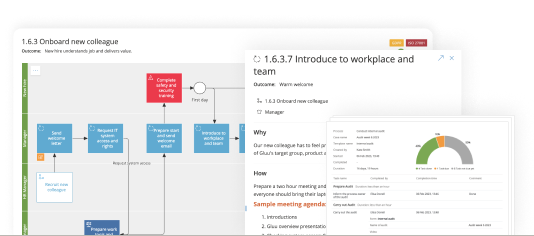
Example features of BPM software that enable a Transformation
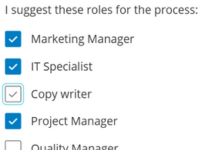
Automatic process creation with AI
Create new process structures based on existing content using generative AI to speed up mapping.

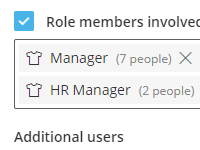
Process-specific edit rights
Manage user edit rights globally or per process to control who can view, change or approve content.
One-click change communication
Summarize changes and send automatic updates to relevant users by email when content is updated.
PDF process guides
Generate offline PDF playbooks from selected instructions to use in manuals or staff handbooks.
4) Employee engagement and training
Training should be role-based and short. Pair it with practical support, like checklists and clear escalation paths. Because when employees can confidently handle exceptions, the process becomes resilient instead of brittle.
Challenges in Business Process Transformation
Even strong teams face predictable obstacles. The good news is that each challenge has a practical response.
- Resistance to change: involve users early, pilot with real cases, and make improvements visible.
- Legacy system integration: prioritize the few integrations that unlock flow and reduce manual handoffs.
- Lack of process ownership: assign an end-to-end owner with authority and clear responsibilities.
- Missing objectives or KPIs: define success upfront and review progress frequently during rollout.
Another common issue is scope drift. It happens when transformation becomes a catch-all initiative for every operational problem. Therefore, keep scope disciplined and run improvements in waves instead of trying to solve everything at once.
In this Gluu Academy lesson I summarise typical challenges:
Examples of Business Process Transformation
Examples make transformation concrete. Here are four common patterns that show up across industries.
Customer onboarding improvement
Onboarding often spans sales, legal, finance, delivery, and support. Transforming it usually means clarifying handoffs, standardizing required inputs, and reducing the waiting time between steps. As a result, customers reach value faster and internal teams spend less time chasing missing information.

Invoice or purchase order process transformation
Procure-to-pay is a classic candidate because approvals, compliance rules, and exceptions are frequent. A strong redesign reduces approval layers, improves data quality at the source, and uses automation for validations instead of manual checking. Besides that, it clarifies who can approve what, and under which conditions.
Contract management digitalization
Contract work improves when templates, review steps, and escalation rules are standardized. The biggest win often comes from reducing ambiguity: what must be reviewed, who reviews it, and how exceptions are handled. Therefore, cycle time drops without increasing risk.
Logistics workflow optimization
Logistics processes benefit from clear exception handling. When “what to do when something goes wrong” is standard, teams recover faster and customers get better communication. Most importantly, standardized handling reduces the cost of firefighting and improves predictability.
When to Apply Business Process Transformation
Not every process needs a full transformation. Start when problems are systemic and recurring, or when the organization is changing in a way that makes the current process unreliable.
- Outdated systems or processes that force workarounds and manual reconciliation.
- High error rates that create rework, customer complaints, or compliance risk.
- Misaligned organizational structure where nobody owns end-to-end outcomes.
- Slow or fragmented workflows with too many handoffs and unclear priorities.
A practical rule: if a process is managed by heroics, it is a strong candidate. Heroics feel impressive, but they do not scale. Besides that, they hide real cost and risk until something breaks.
Measuring Success
Measure transformation with a mix of outcome metrics and adoption metrics. Because if users do not adopt the new way of working, improvements will not last.
- Operational efficiency: cycle time, throughput, backlog, cost per case.
- Quality: error rate, rework volume, exception rate, first-time-right percentage.
- Customer experience: time-to-value, time-to-resolution, CSAT/NPS trends.
- Employee productivity: time spent on coordination, searching, and repeated questions.
- Business impact: reduced revenue leakage, improved delivery speed, fewer escalations.
Also track time to improve. If your governance is healthy, you should be able to implement small process improvements quickly. Therefore, measure how long it takes from identifying an issue to releasing an updated standard.
Try Gluu for free
Sign up for a 30-day trial.
No credit card required.
FAQ – Business Process Transformation
How does AI drive business transformation?
AI supports transformation by reducing manual work and improving decisions. For example, it can classify requests, draft responses, summarize cases, suggest next steps, and detect anomalies that indicate process issues. However, AI performs best when the underlying process is clear, because ownership, rules, and high-quality inputs still matter.
What industries lead in process transformation?
Industries with high volume, strict regulation, or complex handoffs often lead: financial services, manufacturing, healthcare, logistics, and public sector. Besides that, fast-growing service and software organizations invest early because consistency becomes harder during rapid scaling.
What are common challenges in digital transformation?
The most common challenges are low adoption, unclear ownership, disconnected tools, and shifting priorities. Therefore, successful teams invest in communication, role-based guidance, measurable KPIs, and a repeatable governance cycle that keeps processes current.
What is an example of a business transformation process?
A strong example is transforming customer onboarding end to end: redesigning handoffs, standardizing required information, reducing approval delays, and defining exception handling. As a result, customers get faster activation and employees spend less time chasing details.
What are the 5 core business processes?
Definitions vary, but many organizations group core processes as: strategy-to-execution, lead-to-cash, procure-to-pay, hire-to-retire, and issue-to-resolution. Most importantly, prioritize transformation where customer impact and operational cost are highest.